Save Pāʻia
EC Pāʻia LLC is prepping 40 acres of Type A Agriculture land for development in Lower Pāʻia through a fast-tracked process that purposefully lacks public input and critical oversight.
While affordable housing is critical for our community, NONE of the proposed 120 homes will be classified for Low Income housing. 16 homes are for families with incomes between $177,000-$325,000. The rest will be sold at market rate (~$1.6 million)
The proposed project is developer driven, not community driven. It seeks to win over the community by promising an urgent care center and a parking lot, but has bypassed public hearings, traffic impact studies, and more.
Pāʻia deserves more than just a parking lot and over priced homes. We deserve housing for our residents, support systems for our kūpuna, parks for our kids, a library, a true bypass, reduced traffic, youth services, and more. But our voices are being left out.
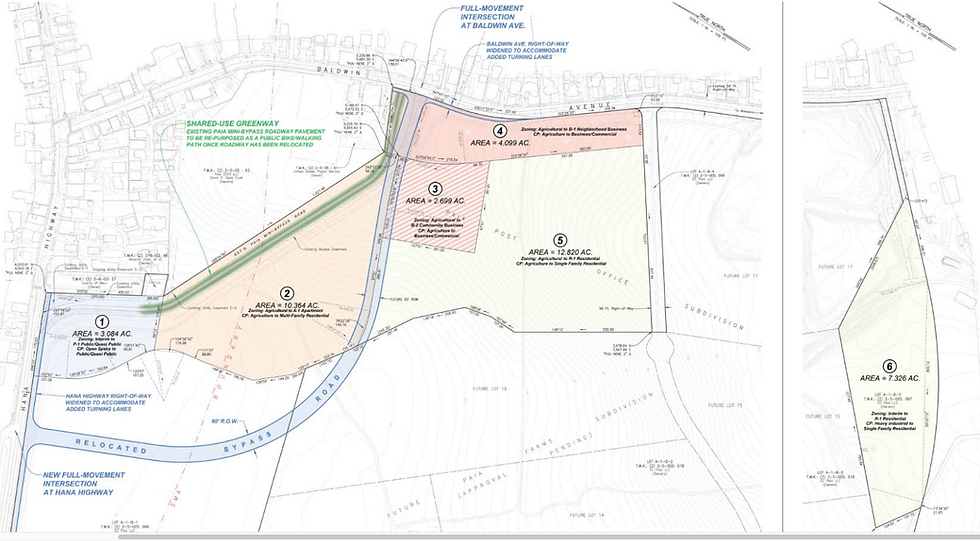
EC Pāʻia LLC's Proposed Plans Call for:
-
120 Houses, ZERO of which would be classified as Low-Income affordable workforce housing
-
50 apartment units, 34 OF WHICH WOULD BE WORKFORCE HOUSING
-
A NEW TRAFFIC LIGHT ON HĀNA HIGHWAY
-
COMMERCIAL SPRAWL FURTHER UP BALDWIN AVENUE AND OUTSIDE OF THE PĀʻIA TOWN CENTER
-
TWO-WAY BYPASS WITH WIDENED BALDWIN AVE AND HĀNA HWY INTERSECTIONs
-
A 200 STALL PARKING LOT LOCATED ON THE EDGE OF TOWN
-
ADDITIONAL ROADWAYS EXITING ONTO BALDWIN AVENUE
-
Current bypass remodeled as a pedestrian/bicycle greenway
-
Adding 500-800 residents without a true Pāʻia Relief Route/Bypass
-
NO low income houses. 70% of homes will be market rate ($1.6 million)
-
Lack of public input, with the developer & consultants purposefully holding only small group and invite-only meetings.
-
No traffic impact studies, despite additional traffic lights and expanded intersections.
-
No identified parks, open spaces, or other public use areas besides a parking lot and a repurposed greenway.
-
No water source/supply analysis
-
No environmental impact study
-
Commercial sprawl up Baldwin Ave and out of the town center.
-
Located in a fire prone area and tsunami zone, without emergency relief routes.
-
A Pāʻia-Hāʻiku Community Plan that is 30 years old.
-
No discussion about how this project balances with Pāʻia Mill Redevelopment, Pāʻia Depot improvements, and Laʻakea Village housing.
The Issues
The resolution passed in May 2026 to change the agricultural zoning is through a process known as "council initiated."
Unlike most private development applications, since this project is Council initiated, it is able to bypass critical, initial project oversight such as public hearings, traffic impact studies, analysis of impacts on surrounding community, water source/supply analysis, sewage disposal analysis, and more.
This rarely used processed has become a favorite of Councilmember Uʻu-Hodgins in recent months to fast-track development projects.
At the May 2026 Council meeting, County Planning Director warned:
“by bypassing the normal application and environmental review or procedures expected of a private development project of significant magnitude there could be a reduction in the level of impact analysis normally performed by the department, the planning commission and the Council.”
Bypassing The Public Process
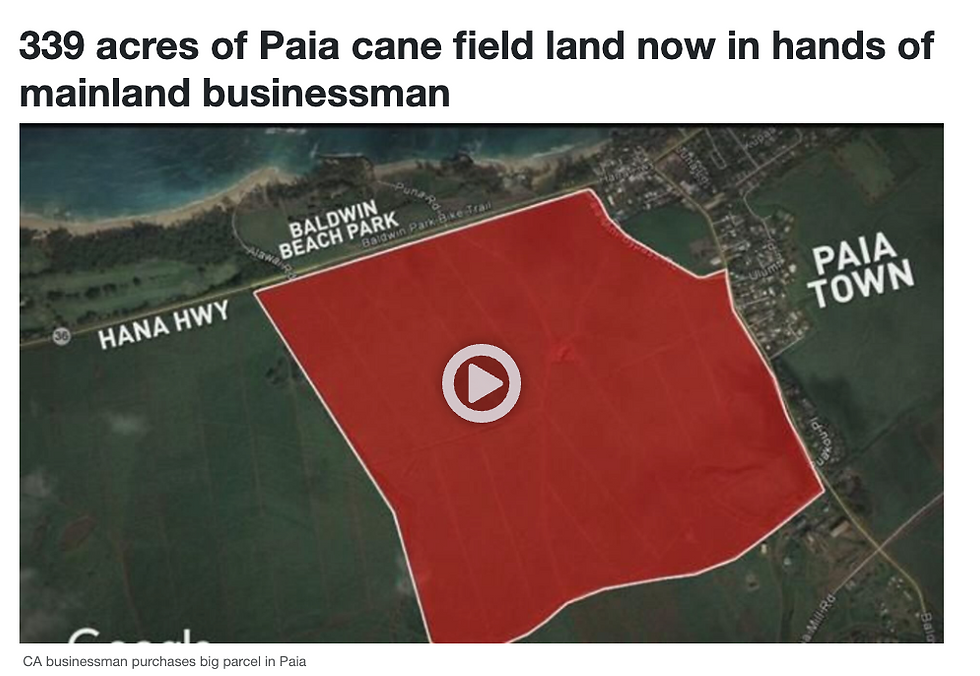
In 2016, California-based developer Sam Hirbod purchased 339 acres of former sugarcane land from Alexander & Baldwin. In 2012, the Maui Island Plan had included 40 of those acres as part of the Pāʻia "Small Town Urban Growth Boundary."
In May 2026, County Councilmember Uʻu-Hodgins introduced and passed a resolution to change the zoning of the 40 acres from agriculture to a mix of residential, business, commercial, and public.
Background


